 Portraitwise
AI photography insights3 min readSee the latest articles
Who owns AI-generated images?
Copyright, originality, image rights, licenses and model training: the legal bearings worth knowing before publishing a generated portrait of yourself.
 Written byLa rédaction
This article belongs to the section AI photography insights
The framework: work, originality and human input
Copyright does not protect images, it protects works of the mind. To qualify, an image must be original — it must bear the imprint of its author’s personal choices. The difficulty specific to generated images lies in the share of human input: a three-word prompt followed by a random draw leaves little room for personal choice, whereas selecting references, directing, sorting, reworking and finishing looks much more like a classic creative process.
What French and European copyright says
The dominant position is that an author is a natural person. An image produced without significant creative human input risks falling outside copyright protection altogether. That does not mean it is not yours or that anyone may use it: it means you could not base an infringement action on that particular ground. Your rights then come from the contract with the provider and from image rights over your own face.
| Question | Legal basis | Practical effect |
|---|---|---|
| May I use the image? | The contract and the provider’s license | Defined in writing by the terms |
| May I stop a third party using it? | Image rights over your face | Yes, independently of copyright |
| May I stop it being copied as an image? | Copyright, if original | Uncertain for a weakly directed image |
| May the provider exploit it? | The contract | Only if you authorized it explicitly |
Image rights: your face remains yours
This is the strongest and most often forgotten point. Image rights protect anyone against the distribution of their image without consent, and they apply fully to a generated portrait that depicts you: the fact that the image is computed rather than photographed changes nothing, since it is your identifiable face at stake. It works both ways — you cannot generate portraits from someone else’s face without their written agreement.
What you grant by accepting terms and conditions
Any generation requires you to grant the provider a license over your photos, otherwise it could neither store them, transmit them nor produce the image. The question is its scope. Four points deserve a careful read: the purpose, the duration, the right to promotional use, and the ability to sub-license to undisclosed third parties. Our own position is written in our terms and conditions.
Commercial use: what to check before publishing
Three checks: does the license cover paid advertising and not just profiles and websites, is it worldwide or territorially limited, and does it survive the closure of your account? A fourth concerns informational contexts: a generated portrait documents no fact, and must not be used as press photography, as supporting evidence, or as part of an identity file.
Are your selfies used to train a model?
It depends entirely on the method and on the provider’s policy. Fine-tuning or a LoRA module produces a durable artefact that encodes your face, and its fate must be documented. Reference conditioning produces none — which is the method we use, for reasons as legal as they are technical. The list of subprocessors involved is public on our subprocessors page.
Our commitments and where to read them
- Your selfies remain yours and are never used to train a model.
- Delivered portraits are usable commercially, without limit of time or territory.
- No image depicting you is used promotionally without a separate written agreement.
- Source photos are deleted automatically at the end of the stated retention period.
- The subprocessor list is public, named and kept up to date.
Portraits whose license is written down
Read annex 1Written by
La rédaction
Editorial team
Articles are written by the team that builds Portraitwise. They cover framing, light, tools and image rights.
Read next
Reference page: AI headshots
Frequently asked questions
Do I own the portraits generated from my photos?
- You hold the usage rights defined by the contract, including commercial ones. Copyright qualification depends on the degree of creative human input and remains uncertain for a weakly directed image.
Can I use a generated portrait in paid advertising?
- Yes if the provider’s license explicitly covers advertising and is worldwide and unlimited in time. Check that specific point: some licenses stop at organic use.
Can I generate a portrait from a relative’s face?
- Only with their written agreement. Image rights apply whatever the technique, and the absence of authorization exposes you personally.
Can a generated portrait serve as an official ID photo?
- No. Identity documents follow strict standards and presuppose an attested capture. A generated portrait must never be presented as supporting evidence.
Your professional portrait, made from your own photos
Send at least 8 pictures of yourself, pick your styles, get a batch of 4K portraits ready to publish.
In the same section
All articles in this section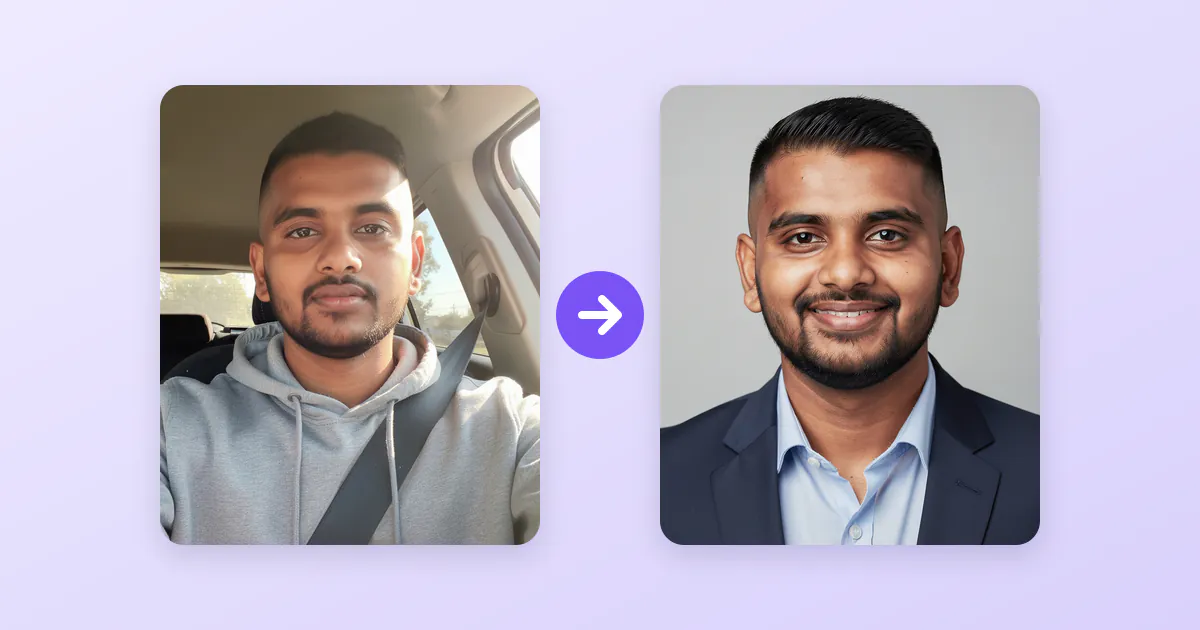
How an AI portrait generator actually works
Diffusion, reference conditioning, likeness and limits: what really happens between the selfies you send and the portrait you receive, explained without jargon.
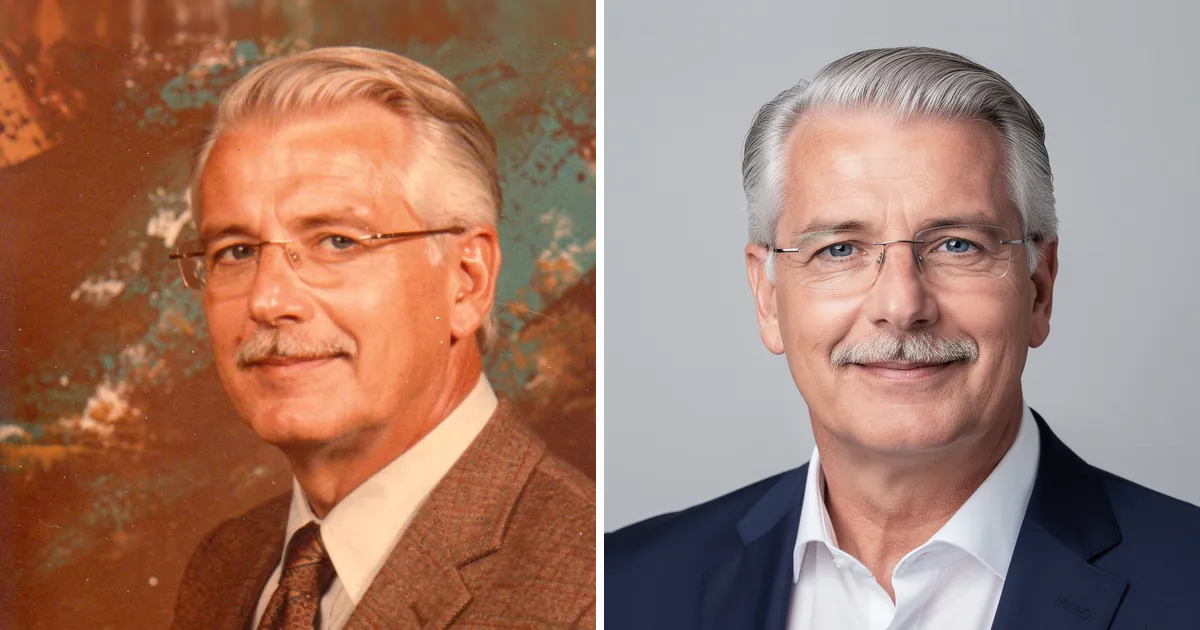
AI portrait or photo session: an honest comparison
Real cost, lead time, number of variants, naturalness: what each option does better than the other, plus a decision table by budget and deadline.
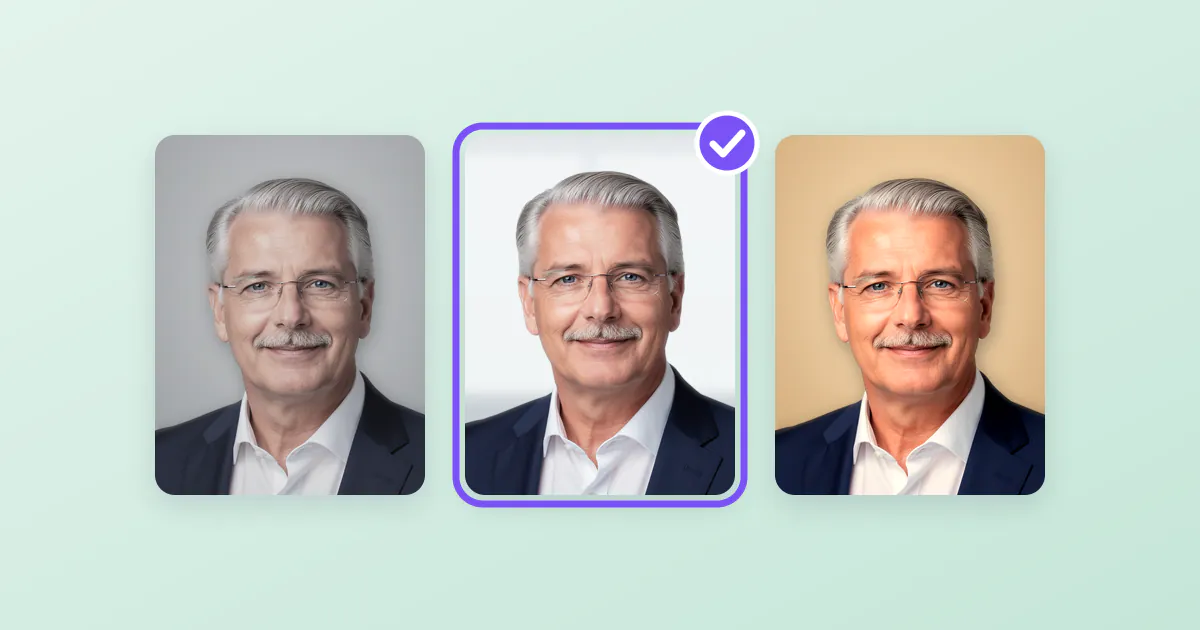
Choosing an AI portrait generator: the grid
Likeness, resolution, real lead time, license, selfie retention and price per usable portrait: eight criteria and a scoring grid you can copy before buying.